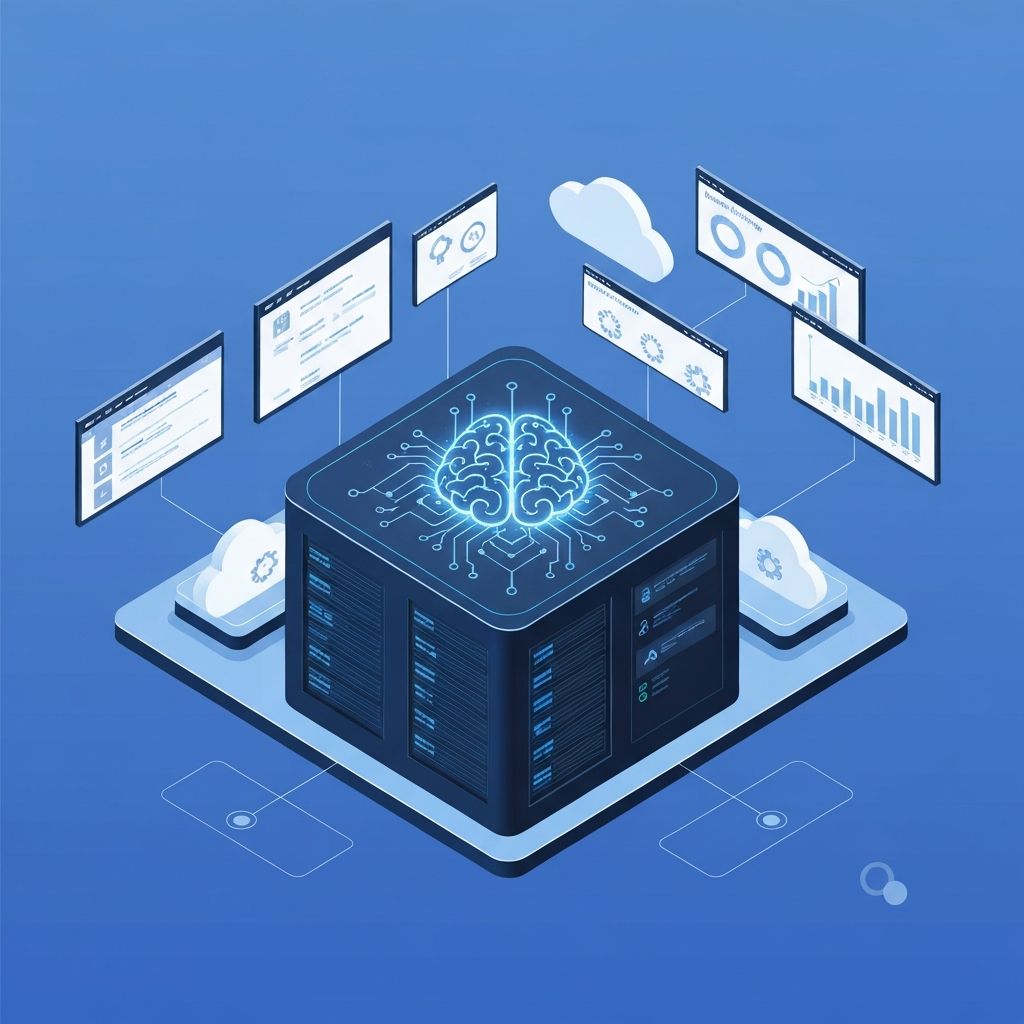
Deploying machine learning systems in enterprise environments presents unique challenges that go far beyond model accuracy. Over the past year, our team at Axionxlab has worked with several enterprise partners to bring AI systems into production. In this article, I'll share the key lessons we've learned about infrastructure, monitoring, team organisation, and the often-overlooked human factors that determine success or failure.
Infrastructure Considerations
Compute Architecture
The compute requirements for ML inference can vary dramatically based on your use case. We've found that a tiered approach works best:
**Real-time Inference**: For applications requiring sub-100ms latency, we deploy models on GPU-accelerated servers with careful attention to batching strategies and model optimisation.
**Batch Processing**: Many enterprise use cases don't require real-time results. For these, we use cost-effective batch processing pipelines that can scale horizontally during peak demand.
**Edge Deployment**: Some applications benefit from running models directly on edge devices. We've developed compression and quantisation techniques that reduce model size by up to 90% whilst maintaining acceptable accuracy.
Data Pipeline Architecture
Production ML systems are only as good as their data pipelines. Key principles we follow:
Monitoring and Observability
Performance Monitoring
Standard software metrics (latency, throughput, error rates) are necessary but insufficient for ML systems. We additionally monitor:
**Prediction Distribution Drift**: Are the model's outputs changing over time? Sudden shifts often indicate data drift or upstream changes.
**Feature Distribution Drift**: Are the input features changing? This often precedes prediction drift and provides early warning.
**Accuracy Degradation**: Where ground truth is available, we continuously evaluate model accuracy against real-world outcomes.
Alerting Strategy
Effective alerting requires careful tuning. We've developed a tiered approach:
Team Organisation
Cross-functional Collaboration
Successful ML deployment requires collaboration across multiple disciplines. Our project teams typically include:
Documentation and Knowledge Sharing
We maintain comprehensive documentation including:
Conclusion
Enterprise AI deployment is as much about organisation, process, and culture as it is about technology. The technical challenges are surmountable, but success ultimately depends on building teams that communicate effectively, maintain rigorous standards, and continuously learn from both successes and failures.
Marcus Webb, Director of Research
Marcus Webb
Director of Research